Showing posts with label Pinterest. Show all posts

Thursday, March 6, 2014

7 Home Improvement & Remodeling Ideas that Increase Home Value (And What to Avoid)

By Heather Levin | MoneyCrashers

7 Projects That Add Value to Your Home

Many projects do add value to your home, and improve your family’s quality of life. By working on these projects now, you can enjoy the benefits and updates. If you make green upgrades, then you can also start recouping your investment in these green energy technologies once you complete the projects.

1. Remodeling the Kitchen

Most people consider the kitchen to be the heart of the home, and because of this, updates in this room pay off. According to HGTV, you can expect to recoup 60%-120% of your investment on a kitchen remodel, as long as you don’t go overboard. You should never make your kitchen fancier than the rest of the house, or the neighborhood.
Why You Shouldn't Invest in a Deluxe Kitchen
For example, a historic home in my neighborhood has been on the market for more than two years. During the owner’s last open house, I went in to check it out, and immediately saw why the house hasn’t sold. The quaint Arts and Crafts style home was built in 1900 and has a lot of charm. Unfortunately, the homeowners had invested over $60,000 upgrading the kitchen.
01
The enormous kitchen, easily the size of the living room, features appliances and countertops that might look more at home in a fancy restaurant kitchen. The style, size, and quality of the kitchen don’t fit in with the rest of the house, or the neighborhood. If you plan on selling your home within the next five years, keep potential buyers in mind before you start on any major remodel; many people won’t pay for a fancy, deluxe kitchen.
A Little Paint Goes a Long Way
When it comes to how much you spend on a kitchen remodel, prices can run the gamut, from $5,000 to $75,000, or more. Get the biggest bang for your buck on a kitchen remodel by looking at color. Fresh paint, in modern colors, can go a long way towards updating the look of your kitchen. Plus, paint is relatively cheap.
You might want to consider using low-VOC paint; this makes your kitchen more eco-friendly, and helps your family avoid breathing in dangerous chemicals, like benzene, that off-gas from regular fresh paint.
Energy-Efficient Appliances
Replace old appliances with energy-efficient models. Energy Star-rated appliances are better for the environment, and they also help you save money, because they use less energy. Potential buyers often look for ways to save money when shopping for a new home.
If you’re looking upgrade your appliances to save energy, learn more about the the best time of year to buy large appliances.
x3

2. Bathroom Addition

If your home only has one bathroom, you can recoup a large chunk of your investment by adding another one. HGTV estimates that you can recoup 80%-130% of whatever you spend adding a bathroom.
When it comes to finding room in your house for an extra bathroom, take a look at any extra rooms or underutilized spaces. Consider other spaces, such as closets or areas under the stairs, too. If you want a half-bath you need at least 18 square feet. If you want a full bath, including a stand-up shower, you need at least 30 square feet. If you want a bathtub, make sure you have at least 35 square feet to work with for a bathroom addition. See these bathroom design and remodeling ideas to get you started.
x24 x28 016
Like any project, the cost of adding a bathroom depends largely on the types of additions and accessories you want to use, and the cost of each of these items. You can save money by frequently checking Lowe’s and Home Depot; they often drastically reduce prices on sinks and toilets that have been floor models. You can also find great prices on tubs, doors, toilets, and fixtures if you shop at a Habitat for Humanity ReStore.

3. Reinventing a Room

Adding more square footage to your home with a new room can be an incredibly expensive project. Although you can recoup some of your investment, anywhere from 50%-83%, this project’s costs can quickly spin wildly out of control. Just turn on any of those home remodeling TV shows; projects that start off with a $15,000 budget quickly turn into $30,000 or more when homeowners and contractors run into unexpected problems.
Reinvent the existing space in your home to save money. Finish a basement, or convert the attic to a bedroom. Many homeowners can also add small apartments in, or over, their garages – which they can then rent out as a room.
Before you demolish walls and rafters, try to think about the ways that you, and potential buyers, can use the space:
  • Versatile rooms have greater appeal to potential buyers.
  • Basements frequently work well as second living rooms, or game rooms. Many people also turn this space into a small apartment for an aging relative or a tenant.
  • Attic spaces often work well for craft rooms and game rooms, especially if they have high ceilings. If you have kids, you can add swings to the rafters, and create a cool play room just for them.
According to Remodeling Magazine’s annual Cost vs. Value report, an average basement remodel, with the addition of a wet bar, costs $64,000. You can save a significant portion of this by doing the work yourself, but even then, adding a new room can be expensive.
45 Eastfield-master bedroom019
g Energy-Efficient Windows
These days, buyers shop for homes with energy efficiency in mind. Old, drafty single-pane windows are a major turn off. Energy Star claims that adding Energy Star-rated windows can save you up to $500 a year in heating and cooling costs by making your home more energy efficient.
According to HGTV, you can expect to recoup 60%-90% of your costs when you invest in energy-efficient windows. You can also receive a green energy tax credit of 10% for this upgrade, as long as you install Energy Star-rated windows. You might also qualify for additional credits from your state, or even your utility company.
Learn more about available offers and rebates in your area by visiting the Energy Star Rebate Finder. They have a searchable database that gives you specific information for your state. Just make sure you check “windows” so you get product-specific information. I searched for energy-efficient rebates in my zip code and discovered that my utility company, DTE, offers rebates to customers who install Energy Star windows.
Energy Star estimates that the average cost of window replacement in an average-sized home costs $7,500-$10,000, or more. If the new windows save you several hundred dollars a year, and you recoup a tax credit, you can eventually recoup your investment.

5. Deck Addition

Adding a deck increases the value of your home. Outdoor living spaces have become more desirable, especially since more people stay home for vacation (i.e. referred to as a staycation). If you make your deck and your backyard more appealing, your house will be more appealing to prospective buyers when you decide to sell. HGTV claims that homeowners recoup 65%-90% of their investment by adding a deck.
The cost of adding a deck to your home varies widely. Everything depends on its size, and how many bells and whistles you want added, like built-in seating, multiple stairs, built-in flower pots, and the size of the deck. Decks can cost anywhere from $1,200 to $10,000, or more. Again, it all depends on the design and materials used.
As you might guess, you can save a huge chunk of the cost, usually half, by doing the work yourself. Keep in mind, however, that deck construction isn’t easy. You need specific tools, such as a bandsaw, and the cost of the tools can be very expensive, especially if you don’t plan to use them again.
If you decide to hire a contractor, shop around before you choose someone to work with. Make sure you get at least three quotes, with specifics, from the contractors you interview. Thoroughly check references for the contractors before you agree to a contract or work order, and watch out for home improvement repair scams. Sites like Angie’s List can ensure you hire a contractor you can trust.
house deck
028 x11

6. Energy-Efficient Insulation

If your home lacks basic insulation, and has old doors that let in plenty of hot and cold air, home inspectors working with potential buyers will include this in their reports. Homes that haven’t been modified with energy efficiency in mind cost more to live in and maintain.
Updating your home to save energy doesn’t have to cost a lot of money and can make your home more appealing to potential buyers. You can save $2,500 or more each year just by making some changes. For example, you can add extra insulation to your attic for $200 or less, and this small change can save you hundreds each year on your utility bill.
Seal cracks around the house to save even more money on energy costs, and to make your home more appealing to buyers. The U.S. Department of Energy (USDE) estimates that the average house has enough leaks to equal a 3×3 foot hole in the wall. You can find leaks in your home during the winter. Anytime you feel a draft or cold spot, you’re in an area that leaks air. You can purchase a thermal leak detector for $40 or less (e.g. Black & Decker TLD100 Thermal Leak Detector). These handheld devices alert you to temperature differences around your home. This then allows you to add caulk or insulation where you need it the most.
You can often discover leaks, and areas that need more insulation, in these areas:
  • Around doors and windows
  • Around electrical sockets and light switches
  • In recessed lighting
  • Around the attic hatch
  • In the basement
  • Anywhere ducts or wires go outside the house
Another easy retrofit is to use CFL light bulbs in all light fixtures. CFL bulbs use 75% less energy than traditional bulbs and each one saves, on average, $40 in energy over the course of its lifetime. You also save on cooling costs because CFLs emit 75% less heat than traditional bulbs. You can easily calculate how much you can save simply by counting the number of lights you have in your home.
You can also install a programmable thermostat. Most buyers expect to see programmable thermostats these days, and they can save you money. Energy Star estimates that installing a programmable thermostat will save the average homeowner $180 per year in heating and cooling costs.
If you need to replace your hot water heater, consider spending a bit extra to purchase a high-efficiency water heater. Savvy home buyers know these water heaters can really trim energy bills. If you use less than 41 gallons of water each day in your household, a tankless water heater saves you 24%-34% on your water heating costs. If you use more, count on a savings of 8%-14%.

7. Basic Updates

Basic updates add the most value to your home. Keep the paint fresh, fix the roof when it leaks, replace wood that rots, and get rid of any mold that you find. These types of chores keep your home from deteriorating over time. Buyers want a healthy, solid, safe home, and they look carefully for signs of routine maintenance.
I’ve replaced the electric wiring in my home, repainted the outside, replaced the plumbing, and repainted the interior. These projects keep my home in tip-top shape so that when I do decide to try and sell again, buyers will see a well-cared-for home.

10 Home Improvement Projects to Avoid

If you plan on moving in two to three years, don’t invest money in home improvement projects that won’t increase the resale value of your home.
Some of these low-value home improvement projects include:

1. In-Ground Swimming Pools

In-ground swimming pools cost $30,000-$75,000, depending on the type of pool installed. While installing a pool may seem like a good idea, a swimming pool makes your house more difficult to sell. Many people, especially families with small children, do not want to buy a house with a pool. Eliminating families with small children drastically reduces the number of people willing to buy your home. In addition, installing a pool increases your energy costs, and raises your homeowners insurance. A swimming pool also requires a lot of maintenance, and usually costs around $1,000-$2,000 or more to operate.
If you live in Southern California, the Deep South, or in the sunny Southwest, a swimming pool may positively impact your home’s value. You may recoup, at most, 30%-50% of your investment in a pool. If you live anywhere else, however, installing a pool may decrease the value of your home, due to the significant operating costs.
Invest in a pool if you plan to stay in your home for several years and use it often. Otherwise, a new pool can cause some significant financial headaches.
45 Eastfield- sunset 

2. Gourmet Kitchens with High-End Accessories

While you may love your $10,000 commercial stove, and top-of-the-line Tuscan tiles, these costly additions don’t pay off when you list your home for sale. If you plan on moving within the next 3-5 years, and you want to remodel your kitchen, invest in quality, serviceable appliances that appeal to many people. In general, too much customization in a home turns buyers away.
Stay on par with your neighbors; too many high-end additions and you will own the most expensive home on the block. You can recoup a fair amount of money on a kitchen remodel, but expensive, fancy gourmet kitchens don’t help you attract that perfect buyer.
Of course, if you have a high-end home in an upscale neighborhood, then upgrading your kitchen to “gourmet” status may increase its value, since buyers expect to see a gourmet kitchen in a high-end home. But even in a high-end home, you may not recoup your entire investment in an expensive kitchen remodel when you sell your home.

3. Whirlpool Baths

It may sound fun and relaxing to take a hot bath after a long workday, but potential buyers will not pay extra for a newly installed whirlpool bath. In addition, the costs for installing a whirlpool tub can be prohibitive. Many homeowners install luxury bathtubs, only to discover they need to invest in a larger hot water tank for the tub to work properly. Furthermore, installing a tub may result in high energy bills, and additional monthly maintenance costs.
Think twice before installing a whirlpool bath. This project can cost you thousands of dollars, and if you run into problems, the costs climb even higher.

4. Sunrooms

This home improvement project goes straight to my heart; I really want a sunroom. Unfortunately, this expensive project adds very little to a home’s value. A sunroom only recoups $486 for every $1,000 spent on construction, or 49%-59% of the initial investment. In addition, glass doesn’t provide insulation, so a sunroom also raises energy costs in the winter and summer.
We ultimately decided not to add a sunroom to our home, since we know it won’t add to the value of our house. However, if you live in the South, or on the beach, where many homes have sunrooms, adding one to your home may actually help you stay competitive when and if you decide to sell. Plus, adding a sunroom to your home may make your house more attractive to a specific group of buyers, but you probably won’t recoup construction costs.

5. Expensive Landscaping

Landscaping can transform the way your house looks, especially to potential buyers. However, going over the top to create a backyard paradise, while nice, won’t add to your asking price. If you plan to stay in your home for a while, this project can improve your quality of life, especially in the warmer months. If you plan to sell your home, you won’t recoup the cost of expensive landscaping in the sale.
Instead of investing in expensive landscaping, make changes to your lawn to add curb appeal to your home. “Wow” potential buyers with a well-kept lawn, and some well-laced shrubbery or small trees. The Cost vs. Value report states that projects that boost the “wow” value of the front of the house recoup a decent percentage, depending on the changes made. Go for classy, subtle changes to the landscaping to really make your home shine.
house landscaping

6. Room Additions

Adding a room to your home can easily cost thousands of dollars. If you build a new master suite, you might see a 66% return on your investment. If add a family room, expect a 62% or less return on your investment. Many budget-minded buyers don’t want to heat and cool a huge house.
However, adding another bedroom to your home is the only exception to this rule. An extra bedroom makes your house appealing to a whole new group of buyers. Save money on renovations by dividing a large space with a wall, in order to form an extra room. In order to qualify as another bedroom, the room will need some other additions, including a window and a closet. You can also consider bedroom interior design ideas on a budget.
Your builder can help you navigate complicated building codes to determine the requirements for building a bedroom. If the room doesn’t qualify as a bedroom for the real estate listing, list the new space as a bonus room instead.

7. Home Office Remodeling

Most people don’t need luxury home offices. The average home office renovation costs around $28,000. You will receive about a 46% return on investment for this pricey remodel. Technology quickly becomes outdated, so investing in new wiring, and other home office components, won’t generate additional income at the time of the sale.
Most people only need good lighting, and room for home office furniture like a desk and a chair. Unless you work at home full-time, you may want to skip this upgrade.

8. Roof Replacement

We replaced our roof last year. When we listed our house, I thought we could raise the asking price by $6,500, to include the cost of the new roof. It hurt when our realtor told us we couldn’t raise our asking price to cover the cost of the new roof. A brand new roof was another feature we could add to our listing, but raising the sale price of our home was out of the question.
Roofs do need replacing eventually, and the consequences of waiting could be very costly, including ruined walls, mold, and mildew stains. Most experts say you only receive 55%-60% of the cost to replace a roof when you sell your home. Conversely, a damaged roof or an old roof may turn prospective buyers away. A new roof can make your home look crisp to prospective buyers, and help you stay competitive in the market.
replace roof

9. Garage Additions

According to the Cost vs. Value report, homeowners who build a garage see a 62% return on investment. A garage addition can cost tens of thousands of dollars. Knowing that you only recoup a fraction of your investment, don’t build a new garage to increase the value of your home.
If you plan on staying in your home for a while, then a garage can greatly contribute to your quality of life. After all, you’d have someplace to park your car, and store your lawn and sports equipment. If you currently store these items under a carport or in a shed, a garage might sound like a great investment.

10. Necessities

According to real estate experts, some necessities, including a new septic system and new plumbing, do not generate more income when you sell your home. Buyers want to know that the sinks and toilets work, but most of them don’t concern themselves with the specifics.
A costly backup power generator might interest to buyers living in an area fraught with tornadoes or hurricanes. Otherwise, a new generator does not add value to your home.
Did any upgrades you made to your house pay off when it came time to sell? What home improvement projects will you work on this year?

Friday, January 24, 2014

Steps to Buying a Home

Step 1: Decide to Buy

The decision to purchase your first home is one of the biggest and best decisions you could ever make. After all, a home is the largest (and most emotional) investment most people will ever make. So, how do you know if it's the right time for you to buy your first home?
  • There is never a wrong time to buy the right home. The key is finding a good buy and taking the time to carefully evaluate your finances.
  • A home purchase is an important step in the path to long-term wealth. Purchasing your own home is a great investment that provides specific financial advantages, including equity buildup, value appreciation potential and tax benefits. It's also an automatic savings plan that you cannot get from renting!
  • Here's the most important rule for keeping your stress to a minimum: you don't have to know everything. Your Keller Williams agent is ready to help you through every step of the process.

Step 2: Hire Your Agent

When you're looking for a real estate professional to help you, know that above all else, good agents put their clients first. This is your dream, and your agent is your advocate to help you make your dream come true.

A great real estate agent will:
  1. Educate you about the current conditions of the market.
  2. Analyze what you want and what you need in your next home.
  3. Guide you to homes that fit your criteria.
  4. Coordinate the work of other needed professionals throughout the process.
  5. Negotiate with the seller on your behalf.
  6. Check and double-check paperwork and deadlines.
  7. Solve any problems that may arise.

Step 3: Secure Financing

Ultimately, your lender will pre-approve you for a certain amount, but YOU will decide what you're comfortable paying every month. Remember, your lender only sees your finances on paper. It's up to you to decide how much you're willing to stretch your budget in order to get into your dream home.

Be sure to follow these six steps to financing your home:
  1. Choose a loan officer.
  2. Make a loan application and get preapproved.
  3. Determine what you want to pay and select a loan option.
  4. Submit to the lender an accepted purchase offer contract.
  5. Get an appraisal and title commitment.
  6. Obtain funding at closing.

Step 4: Find Your Home

So you are preapproved and ready to begin your search. But how or where do you begin? There are a lot of homes out there and diving in without a guide can become overwhelming and confusing. A great agent will help you more accurately pinpoint homes that fit your criteria. The right home will meet all your important needs, and as many of your additional wants as possible. Some questions you might ask yourself include:
  • What do I want my home to be close to?
  • How much space do I need and why?
  • Which is more critical: location or size?
  • Would I be interested in a fixer-upper?
  • How important is home value appreciation?
  • Is neighborhood stability a priority?
  • Would I be interested in a condo?
  • What features and amenities do I want? Which do I really need?

You'll learn as you look at homes, your priorities will probably adjust along the way.

Step 5: Make an Offer

Once you've found a home you love, the next step is making a compelling offer. While emotions are probably in high gear once you've found a home you love, it's important to remember that a home is an investment. Your agent will research similar properties in the neighborhood to help you determine the market value, and fair price, for your home. Look to your agent to explain and guide you through the offer process.
  • The three basic components of your purchase offer are price, terms and contingencies.
  • Price is the dollar amount you are approved for, willing and able to pay.
  • Terms cover the other financial and timing factors that will be included in the offer.
  • Contingencies are clauses that let you out of the deal if the house has a problem that didn't exist or which you weren't aware of when you went under contract. They specify any event that will need to take place in order for you to fulfill the contract.

Step 6: Perform Due Diligence

Just because you love a particular property doesn't mean that it's perfect. In fact, this is where reason has to trump emotion. You'll need to have a property inspection (which we highly recommend you attend) that will expose hidden issues. This way you'll know what you are getting into before you sign closing papers.
  • Your main concern is the possibility of structural damage. This can come from water damage, shifting ground, or poor construction when the house was built.
  • Don't sweat the small stuff. It's the inspector's job to mark everything discovered no matter how large or small. The inspectors report may be long, but, things that are easily fixed can be overlooked for the time being.
  • If you have a big problem show up in your inspection report, you should bring in a specialist and if the worst-case scenario turns out to be true, you might want to walk away from the purchase.
  • Even if your home passes inspection, you'll still need to buy a home owner's insurance policy that protects you against loss or damage to the property itself and against liability in case someone sustains an injury while on your property.

Step 7: Close

Once you've made your offer and have completed the inspection process, you're in the "home" stretch! But, in order to ensure that you don't put your closing date, or your mortgage at risk, you have a few pre-closing responsibilities that you'll need to be mindful of. These include:
  • Staying in control of your credit and finances. If you are tempted to make any large purchases during this time, it's best to talk to your lender first.
  • Keeping in touch with your agent and lender, returning all phone calls and completing paperwork promptly.
  • Communicating with your agent at least once or twice a week, and verifying with your lender that all mortgage funding steps are completed.
  • Conducting a final walk-through of the home with your agent.
  • Confirming with your agent, home insurance professional, and lender that you have the settlement statement, certified funds, and evidence of insurance lined up prior to closing.

Step 8: Protect Your Investment


    Congratulations, and welcome home! The home-buying process is complete, but just like any big process, there's a maintenance plan! It's now your responsibility, and in your best financial interest, to protect your investment for years to come. Performing routine maintenance on your home's systems is always more affordable than having to fix big problems later. Be sure to watch for signs of leaks, damage, and wear.

    And remember, just because the sale is complete, your relationship with your agent doesn't need to end! After closing, your agent can still help you - providing information for your tax returns, finding contractors and repair services, and even tracking your home's current market value.

    Monday, October 28, 2013

    Contemporary Kitchen Cabinets

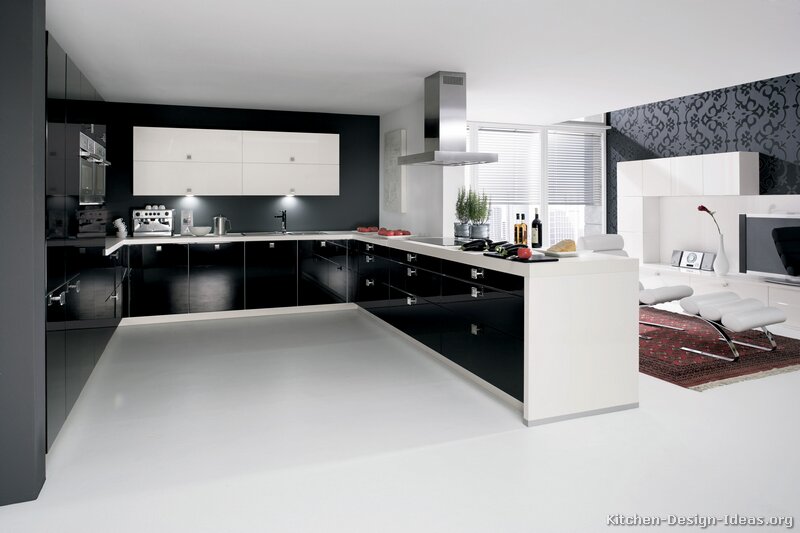
    Contemporary kitchen cabinets are generally composed of minimal ornamentation and flat surfaces. The cabinetry style is intentionally non-traditional, avoiding decorative moldings in favor of simplicity and function.
    A Black and White Kitchen with Contemporary Cabinets
    This black and white kitchen features contemporary cabinets by ALNO, AG. [+] More Pictures
    Historic Influences: Contemporary kitchen designs date from the 1940s to the present, and trace many of their stylistic origins in Europe.
    Contemporary Kitchen Cabinets   Contemporary Kitchen Cabinets   Contemporary Kitchen Cabinets


    Elements of Style: For a clean and spacious look, contemporary kitchen design typically avoids excess ornamentation. Crown molding, wood carvings, and raised panel door styles are almost never used. Small spaces can be made to feel bigger if there is less visual stimulation. Therefore the relatively flat surfaces found in contemporary kitchens can be of benefit to smaller modern homes.
    Materials: Most materials in contemporary kitchen designs are man-made, including metal, plastic, concrete, glass, and recycled goods. While these man-made materials can often feel cold and sterile, many designers like to incorporate natural elements such as wood veneer and natural stone to bring some warmth back into the room. Simple decorations such as a potted plant or a bowl of fruit can also give your kitchen a more natural ambiance.
    Contemporary Kitchen Cabinets   Contemporary Kitchen Cabinets   Contemporary Kitchen Cabinets
    Color Schemes: Many contemporary kitchens have monochromatic color schemes, featuring various combinations of black, white, and gray. These kitchens tend to look very modern and sharp. Some contemporary designs, however, incorporate unique colors or exotic wood in order to create a visual impact and showcase the homeowner's favorite materials or hues.
    Kitchen Design Photos: Below are some pictures of kitchens featuring contemporary cabinets. If you enjoy the beauty and simplicity of these kitchens, be sure to take a look at our galleries of EuropeanAsian, and Modern kitchens as well. Enjoy the photos!


    Contemporary Kitchen Cabinets  Contemporary Kitchen Cabinets   Contemporary Kitchen Cabinets


    Read more: http://www.kitchen-design-ideas.org/contemporary-kitchen-cabinets.html#ixzz2iaPib6pn

    Thursday, October 17, 2013

    How to Organize a Kitchen: 10 Tips & Ideas

    Learning how to organize a kitchen not only ensures that your kitchen is consistently neat and tidy, but also helps to streamline kitchen activities. Regardless of whether you have just moved into a new house or want to improve the functionality of your current kitchen, we believe these tips will help.
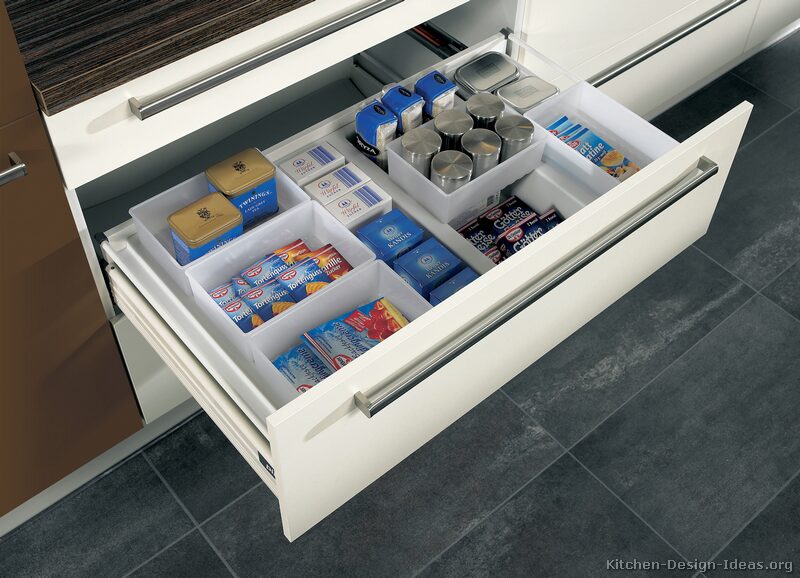
    One of the most popular ways to organize a kitchen is to start with a good drawer divider system.
    One of the most popular ways to organize a kitchen is to start with a good drawer divider system. See more of this ALNO kitchen here.
    1. Dispose of Clutter: Donate or discard anything that you are no longer using in the kitchen. You can hand it down to a relative, donate it to charity, or sell it on eBay or at a yard sale. While some of the cookware in your kitchen may have some sort of sentimental value to you, be sure to weigh how much you use it versus how much space it consumes. For example, when did you last use the cookie press? Is the melon baller gathering dust? Do you use all the gizmos in your kitchen? Getting rid of kitchenware that you no longer use will create space for the items you really use. If you want great de-cluttering ideas and inspiration, read Clutter's Last Stand by Don Aslett.

    2. Go Shopping: If there is broken kitchenware, replace it with cookware that is functioning. For example, if the fry pan keeps scorching your delicate dishes, replace it with a non-stick fry pan. If you do not have the money to replace the kitchenware, include it in your birthday or anniversary request list.

    3. Sort Smarter: Keep utensils that are frequently used in an area that can easily be reached. For instance, you can have a cupboard for keeping utensils that are rarely used and shelves for keeping cookware that is frequently utilized. Then again, if you lack enough room in your kitchen to build shelves and cabinets, rarely used items can be kept in an protective container in the garage.
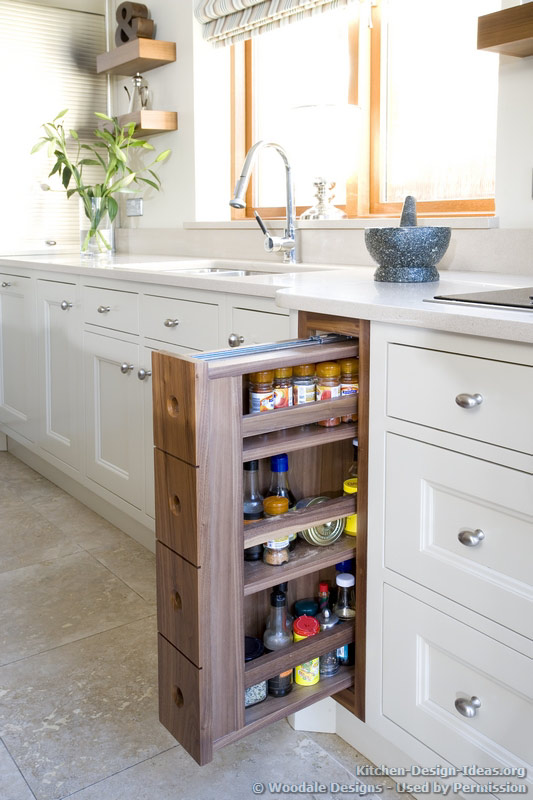
    A pull-out spice rack is a great way to keep your spices organized in one place.
    A pull-out spice rack is a great way to keep your spices organized in one place.
    4. Create Work Zones: Consider various centers of activities and keep related cookware close to one another. If you happen to be remodeling, consider building a pantry near the refrigerator to consolidate your food zones, adding a preparation area where meals are prepared before cooking, and a cooking area where the stove is to be placed with appropriate spices and utensils close by. Other zones to consider are a cleaning and waste disposal area as well as a baking and serving area. Creating these activity zones will streamline operations in your kitchen. Check out Blum Dynamic Space for more suggestions on ideal work zones, which are introduced in the video below:


    5. Clear the Countertops: The kitchen counter is your main workspace. Do not forget to clean it in addition to removing clutter from it. How often do you use the appliances currently taking up space on the countertop? Is the mixer, toaster oven, rice cooker, or juicer collecting dust? If you any of your countertop appliances infrequently, consider storing them in a nearby cabinet instead to be pulled out when needed. 
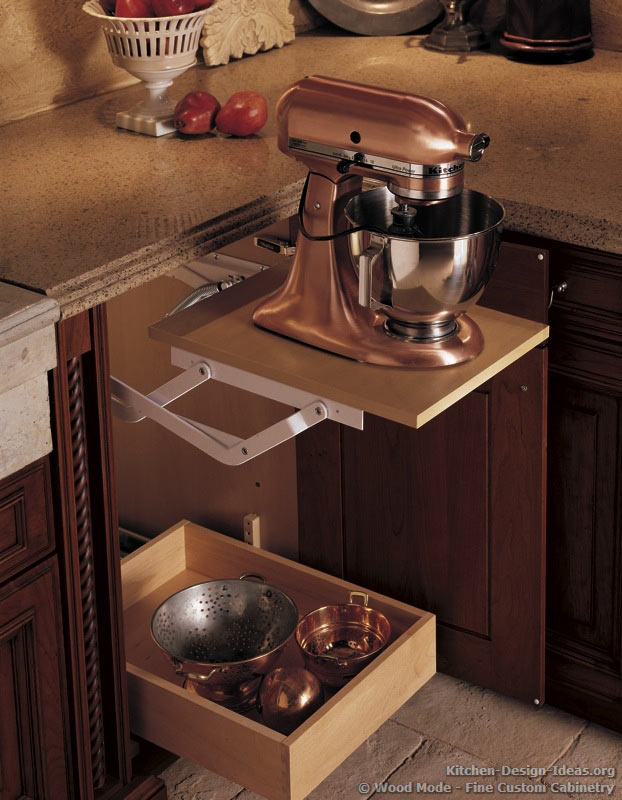
    Save counter space by storing your stand mixer in a base cabinet. This one is built onto a mechanized cabinet lift for frequent access.
    Save counter space by storing your stand mixer in a base cabinet. This one is built onto a mechanized cabinet lift for frequent access.
    6. Organize Shopping Lists: For couples and families, keeping a consistent place for a shopping list is very helpful, so that anyone can mark the things that you do not have in your kitchen. Also, maintaining a separate list of supplies you like to store your kitchen will help you in ensuring that your kitchen is always stocked. Maintaining this supply list aids you in buying what is necessary for your kitchen, thus avoiding impulse buying.

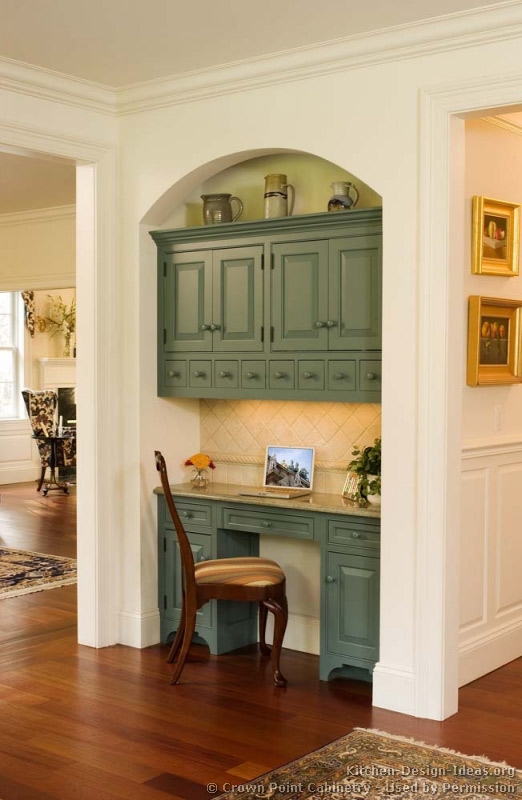
    7. Setup a Workstation: Do you use your kitchen when sending mail or helping your kids with homework? Do you find yourself reading the morning newspaper in the kitchen? If you find yourself using the kitchen for other activities besides cooking, make sure that there is a tidy location within your kitchen where you can sit and read a book or help your child with their homework. See this gallery of Kitchen Desks on Pinterest for more inspiration.
    Kitchen Desk
    An increasing number of families now use the kitchen for everyday tasks, from checking email to doing homework. If you plan to have a desk in your kitchen, be sure to keep it tidy. See more pictures of this kitchen.
    8. Get a Tune Up: Your kitchen will not be at its optimum if there are broken or damaged components, such as leaking faucets or partially clogged drains. If something is broken in your kitchen, make a point of replacing or fixing it as soon as possible.

    9. Sort by Frequency of Use: Ideally, an efficient kitchen basically boils down to having what you need at your fingertips. If there are items that you use on a frequent basis, you can keep them close to the area where they are most used, while lesser-used items should be placed in harder-to-reach areas.

    10. Keep Tidy Habits: Finally, do not forget to clean the kitchen as you work. Once you are through with a pan, have it cleaned and stored away. This is the most productive habit to maintain. Cleaning as you work ensures that clutter does not pile up to unmanageable sizes in the kitchen.


    Read more: http://www.kitchen-design-ideas.org/how-to-organize-a-kitchen.html#ixzz2hvIZeqZL

    Friday, June 14, 2013

    Designing on a Budget

    Think your design ambitions are bigger than your budget? Think again.
    Here are 11 ways to achieve the look you want
    1. Paint
    Though painting is the cheapest investment you can make, it’s also the one with the most dramatic result. Go ahead and put some color on those walls for a fresh — and inexpensive — new look.
    2. Do It Yourself
    The biggest budget buster is hiring others to do things you could do. Consider what you'll save by taking on some relatively simple projects: painting, tiling, installing a new floor, sewing curtain panels or throw pillows — whatever you feel up to trying.
    3. Call in Family and Friends
    You may not have a wad of cash or a lot of home-improvement know-how, but you have other resources that can help get your decorating project off the ground: the people you know. Call on a group of relatives, friends and neighbors who can supply the muscle to rip down wall paneling, roll on paint or assemble a room of flat-packed furniture. Just don’t forget to feed them lunch.
    4. Shop Secondhand Stores
    Thrift stores, consignment shops, church rummage sales, online auction sites, estate sales and even salvage yards offer a bounty of discount decorating booty. Look for furniture with solid construction and classic lines that new upholstery or paint will bring back to life.
    5. Look for Less-Than-Perfect Merchandise
    You may be able to snag super deals on slightly damaged items, floor models and seconds (such as towels from a dye lot that was slightly off), so be sure to check stores’ "as is" areas or to ask the manager about fire-sale items. Chances are, no one but you will be any the wiser, and you’ll save big bucks.
    6. Save With Stock Items
    Custom framing, sewing, upholstering and other skilled labor can add a bundle to the bottom line. Instead, stick with stock items whenever you can: Buy off-the-shelf frames and mats, and trim non-valuable art prints to fit them. Buy standard blinds that are a bit larger than your windows and mount them outside the frames. Snap up stock cabinets and finish them with moldings for a custom look. Order that sofa in a neutral, ready-to-ship fabric and use the money you save to splurge on colorful throw pillows.
    7. Wait Patiently for Sales and Discounts
    Wait to find what you really love at a price you really love. While you shop, ask if items will be discounted any time soon. Store and department managers are usually the best sources for this insider info and may even offer you the discounted price before it goes into effect.
    8. Mix, Don’t Match
    Not only is a "matchy-matchy" look boring, but buying entire suites of furniture tends to cost more than putting together a creative, eclectic look. Mix it up by opting for a couch and chairs upholstered in complementary fabrics, flanking a bed with unmatched nightstands and decorating with other diverse items unified by color, form, material and tone. Or try pairing a stately wood table with shiny aluminum or brightly colored plastic chairs. And don’t be afraid to mix high-end and low-end or modern and traditional.
    9. Sew Your Own Linens
    If you have a sewing machine, you can quickly and easily transform patterned flat sheets into curtain panels, pillow and duvet covers, tablecloths, and even slipcovers — and pay a small fraction of what you’d shell out for fabric yardage. Of course, this assumes you've had successful sewing experience or are good friends with a seamstress.
    10. Add Unexpected Accessories
    Almost anything can serve as an accessory, and that goes for found objects and household items that cost practically nothing. Architectural corbels rescued from a salvage yard make great bookends, while seashells and driftwood collected at the shore create a lovely natural grouping. A bowl filled with crisp green apples lends a bright pop of color to just about any surface, and a stack of vintage hardbacks adds height, dimension and character to an occasional table.
    11. Reuse Items You Already Have
    You don’t have to buy new pieces to turn your tired domicile into a hip space. Instead, turn a fresh eye to what you already have and think about how it might be camouflaged, re-purposed or re-imagined. Reinvent a drab dresser in a guest bedroom as a dramatic dining-room sideboard with a few coats of glossy black paint and sparkling new hardware. Make over that old couch with a slipcover in a fabulous fabric. Turn plain pillows into eye-catching accents by stenciling simple designs on them. After all, there’s no better budget stretcher than your imagination.

    Monday, April 22, 2013

    Celebrating Earth Day

    Happy Earth Day!
    What does this mean for you and your household. It can simply mean turning off the lights when there not in use, or don't keep the water running when not being used. Today you can make the decision to go a little more green and save money along the way, here are some household tips to achieve that: 

    Power off
    • The screensaver on your computer uses the same amount of power as when it's on and being used. Switch your PC off if you're going to be away for a while.
    • Turn down your water heater. By lowering the temperature on your water heater from 140 to 120 degrees will reduce your water heating costs by 6-10%
    • 50-70% of a household energy costs come from heating & cooling according to the Department of Energy.
    • Installing a programmable thermostat will save you approximetly $150 a year.
    • Aim for 78 degrees of higher when you are at home while reducing your cooling loads 10-20%. When you are away from home make it 85 degrees, and save an additional 5-12%.
    • In cold weather for every degree you lower the thermostat you will save between 1 and 3% of your heating bill. 

    Unplug
    • Unplug unused chargers, plugged in cellphones, laptops or anything for that matter. Americans throw away about 8% of our annual electric bill from having objects just simply plugged in.
    • The easiest way to save is to buy a surge protector that can plug in multiple units, that way you can turn off more than one charger in one switch.

    Light Fixtures
    • Install CFL's, the spiral-shaped bulbs known as compact fluorescents use less than a third of the energy regular bulbs use and last 10x longer. 
    • If every household in the U.S. replaced just on regular bulb with a CFL, the amount of energy saved could light 2.5 million homes for a year.
    Water Fixtures
    • Buy low-flow toilets, they use less than a gallon of water, brands such as American Standard, Toto and Kohler. Toilets used to use about 5 gallons per flush, so if your toilet is outdated it may be time to make this change.
    • Buy low-flow shower heads, which can decrease water usage by 50-70%. They only cost about $8
    •  install low-flow faucets.
    • Wash clothes in cold water whenever possible. As much as 85 percent of the energy used to machine-wash clothes goes to heating the water.
    • Use a drying rack or clothesline to save the energy otherwise used during machine drying.
    Upgrade to Energy Star Appliances
    • Look for the blue and white label which means the item uses at least 10-50% more efficient than standard models. more than 18,000 products have the Energy Star design.

    Other
    • Use a water filter to purify tap water instead of buying bottled water. It will save you money & help you live a more green lifestyle.
    • Bring a reusable water bottle, preferably aluminum rather than plastic, with you when traveling or at work.


    By making these small changes you can save money & make for a cleaner earth one household at a time


    Friday, April 5, 2013

    Using Pinterest for Real Estate

    Pinterest is one of the most entertaining apps available, Ill find myself on it for an hour before bed. And im not the only one, if your not using Pinterest for your real estate listings, your missing out on one of the best ways to get traffic to your website. People love pictures, and to share their ideas, pin and re-pin. In fact, some Realtor’s state that they get more traffic coming from Pinterest than they do anywhere else, simply because they have a strong Pinterest presence, and high quality pictures of their homes. Each pin that you post, if clicked on can connect the pinner directly to your website.

    According to Real Estate Social Media Blog, Pinterest is also a great technique for real estate SEO, as each pin and re-pin increases your back-links. The key is linking the picture to your website. Each time the picture is re-pinned the link follows, meaning that when someone down the road clicks on the image, it takes them to your website. This will not only give you more back-links, which will look good to Google, but will also generate more traffic to your website.

    Pinterest is made up of a couple of components - the pin, boards, and re-pins. A pin is the picture that you put onto Pinterest. These include descriptions, and a link. You’re going to want to include either a link to your website, or to the listing. Boards are a way to keep pins separated and organized. People make boards, and then organize their pins according to the boards. Re-pins are kinda like re-Tweets. They are people that liked your picture, and pinned it to their wall.

    The best way for Realtors to use Pinterest is to organize their pins onto different boards. The boards should be organized by the different areas you cover. For us we have boards for Rolling Hills, Palos Verdes, Rancho Palos Verdes, and San Pedro. Then also add a few boards for things you guys like, re-pins, etc. this will also direct people to your page and they will be able to see your other boards. For your boards, choose Architecture as its category.

    The most popular pins to eb re-pinned include elegant bathrooms and kitchens, outside pictures of the home, waterfront views, beach views, and more. If its unique, elegant, or beautiful people will see it and pin it to their wall. Even ugly, funny, and celebrity homes, are good ways to direct attention to your boards.

    When making the description for the photo keep it simple and search friendly. You can add the address, but also add key words like "home for sale in Rolling Hills" or "Rolling Hills Real Estate" by adding words like this there more likely to come up when people are searching.

    The more you put into it, the more you will get out of it. Pictures on Pinterest can go viral at any second. Another good practice is to post articles, or posts from your blog and then pin the images from the article onto your Pinterest board. The user will then be taken to the article, which has a backlink to your website.

    Check out our team's Pinterest http://pinterest.com/theinmanteam/boards/

    Enjoy the Weekend & we'll see you Monday
    The Inman Team

    Monday, March 18, 2013

    Want more of The Inman Team

    Are you following us on our other sites?

    Check us out for Real Estate News and to catch a glimpse of the busy lives of The Inman Team.

    Facebook: https://www.facebook.com/pages/The-Inman-Team/115726945105994

    Twitter: https://twitter.com/theinmanteam

    Our Website: http://www.inmanteam.com/

    LinkedIn: http://www.linkedin.com/profile/view?id=42904389&trk=hb_tab_pro_top

    Instagram: TheInmanTeam

    Pinterest: The Inman Team http://pinterest.com/theinmanteam/

    We got many requests asking for other sites that we are on, so here they are! Feel free to "Like" us on Facebook Follow us on Twitter, Check out our Website, Instagram and Pinterest. We will always reciprocate the gesture.

    Thank your for Reading!

    Wednesday, March 6, 2013

    DIY Painting Basics

    Did you know that painting is the one thing that will make the biggest impact to your home for the least amount of money? A fresh coat of paint can transform your home from drab and dreary to fresh, clean, bright and updated.

    If you are thinking about selling your home, then it would be in your best interest to give your home a fresh coat of paint inside and out if you can afford it. It could mean the difference between a quick sale or no sale or an asking price offer from a low ball offer.

    Here are a few things you can do to give your home that fresh, well taken care of, upgraded look.

    You will need:

    • Stepladder
    • Screwdriver
    • Angled sash brush
    • Wide paintbrush and paint roller and tray
    • Extension pole for paint roller
    • Paint
    • Painter’s masking tape
    • Cleanup rags and drop cloths to cover the floors and furniture etc.

    What To Do:

    • Scrape away old layers of paint if necessary
    • Remove wallpaper if necessary
    • Sand the imperfections
    • Fill any nail holes with putty
    • Apply your primer coat
    • Cover the floors, furniture and anything you don't want to get paint on
    • Remove hardware - light switch and plug covers, curtain rods etc.
    • Cover all the trim with masking tape
    • Paint a three inch strip of paint out from around the top and bottom of the trim using your angled paint brush because you won't be able to get that close to the trim with a roller
    • Now take your roller and fill in the remaining wall areas that need painted. You can use a paint brush but it will take much longer and won't look as smooth as when you use a roller
    • The best way to cover the roller with paint is to fill the paint tray with paint. Then dip your roller into the deep end of the tray then roll it over the ribbed section of the tray to cover the roller evenly. Now you simply take your evenly coated roller and roll up and down the wall making vertical lines. Then take the roller and paint right to left diagonally across the vertical lines you just painted and this will give you an even finish


    Their are so many small and simple things you can do for your home, to give it those finishing touches. Do the little things now and the next thing you know you will be packing and getting ready to move into your new home.

    Thanks for Reading,
    The Inman Team

    Monday, March 4, 2013

    Prime Time for Social Media

    When is the best time to Post, Tweet, Update Statuses and Blog? How can I get more likes and traffic to my page? Those are the big questions many people are wondering for their businesses. Knowing when to post a status update, tweet a blog post or send out an email newsletter can make the difference in its effectiveness. After all, it does not do much good to share a video early in the morning if your readers, fans or customers are typically not active until late in the day. Does it really matter what time and day of the week you post on? The answer is YES, although it does not mean that if you don't post at the specific time, you wont get more "Likes" it just means on average this is when more people are on, therefore more people will view your post.

    According to data from bit.ly, The BEST day to Post/Tweet/etc is Wednesday with the ideal time between 1pm to 4pm.

    BEST TIMES TO POST ON...

    FACEBOOK:

    The prime time for links is between 1 p.m. and 4 p.m.
    Bit.ly data, says 3 p.m. on Wednesday is the peak time to post links on Facebook.

    -Best Facebook "Sharing" is done on Saturdays
    -FB "shares" spike around noon and after 7pm.
    -"While traffic starts to increase around 9:00 a.m., one would be wise to wait to post until 11am,"
    -Posts from fan pages generally last for 22 hours, and 51 minutes.
    -You should not Post more than once a day on Facebook Fan Pages

    TWITTER:
    The prime time for clicks is between 1 and 3 p.m. on Monday through Thursday.
    The worst times are after 8 p.m. and after 3 p.m. on Fridays.

    -Most Retweets occur around 5pm. So try to Tweet before then.
    -Best time to tweet generally, Noon and 6 pm. Lunch time, and average time people get off of work.
    -Best time to tweet for the most traction is on a Monday between 1:00 p.m. and 3:00 p.m. ET.
    --Life span of a Tweet on average is 2.8 hours

    PINTEREST
    -The best time to share things on Pinterest is Saturday morning, according to data from Bitly,
    -12% of clicks comES from mobile devices.

    TUMBLR:
    -It's suggested to wait until at least 4:00 p.m. ET. to post important content, and posts that go up after 7:00 p.m. get the most clicks during a 24-hour period.
    -It's also suggested that Friday evenings are a key time to post on Tumblr
    -Traffic from Tumblr peaks between 7:00 p.m. and 10:00 p.m. on Monday and Tuesday

    INSTAGRAM
    - Use Statigram.com to come up with the statistics for your personal Instagram, and figure out when the best time for you to post is.


    -Nearly 50% of Americans are on the Eastern Time Zone. This may also affect your traffic coming in. Figure out your market, are trying to provide posts for traffic nationwide or more locally. For Our Team, we focus on local areas and times.


    *These are all tips & data taken from different researches, they may contradict each other, but generally provide the times and days most beneficial to use social media.

    *times/numbers data from bit.ly.